AI voice drafting
Finish speaking with text that is ready to send
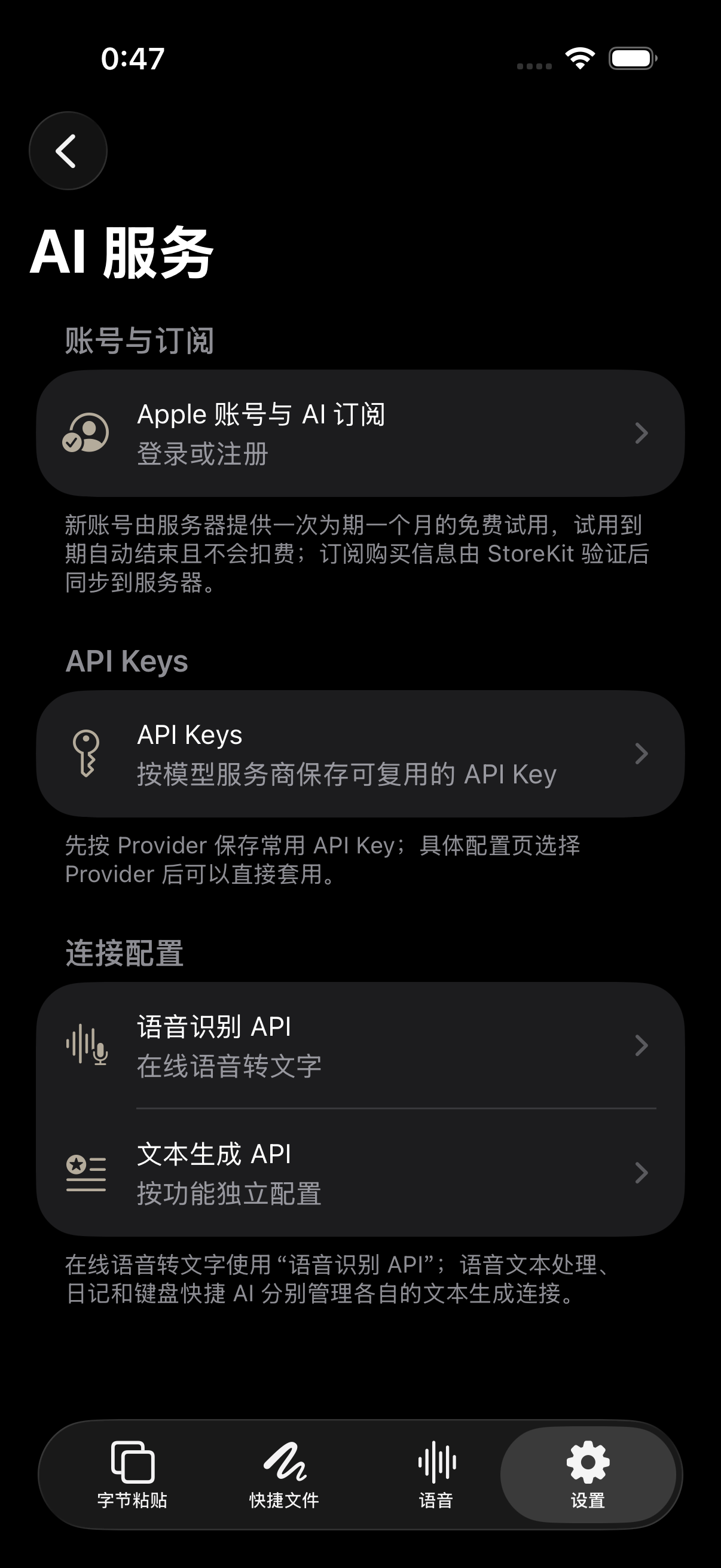
Capture speech with Apple Speech, offline Whisper, or online ASR, then clean up filler words, punctuation, and structure using the active preset.

AI keyboard · iPhone / iPad / Mac
NanoMouse brings voice-to-draft, rewriting, and translation to any app that supports third-party keyboards. Rime Chinese input, Double Pinyin, and reusable personal material stay in the same input field from first thought to final message.
19 real workflows
Drag sideways to explore AI input, keyboards, Emoji, and creation tools
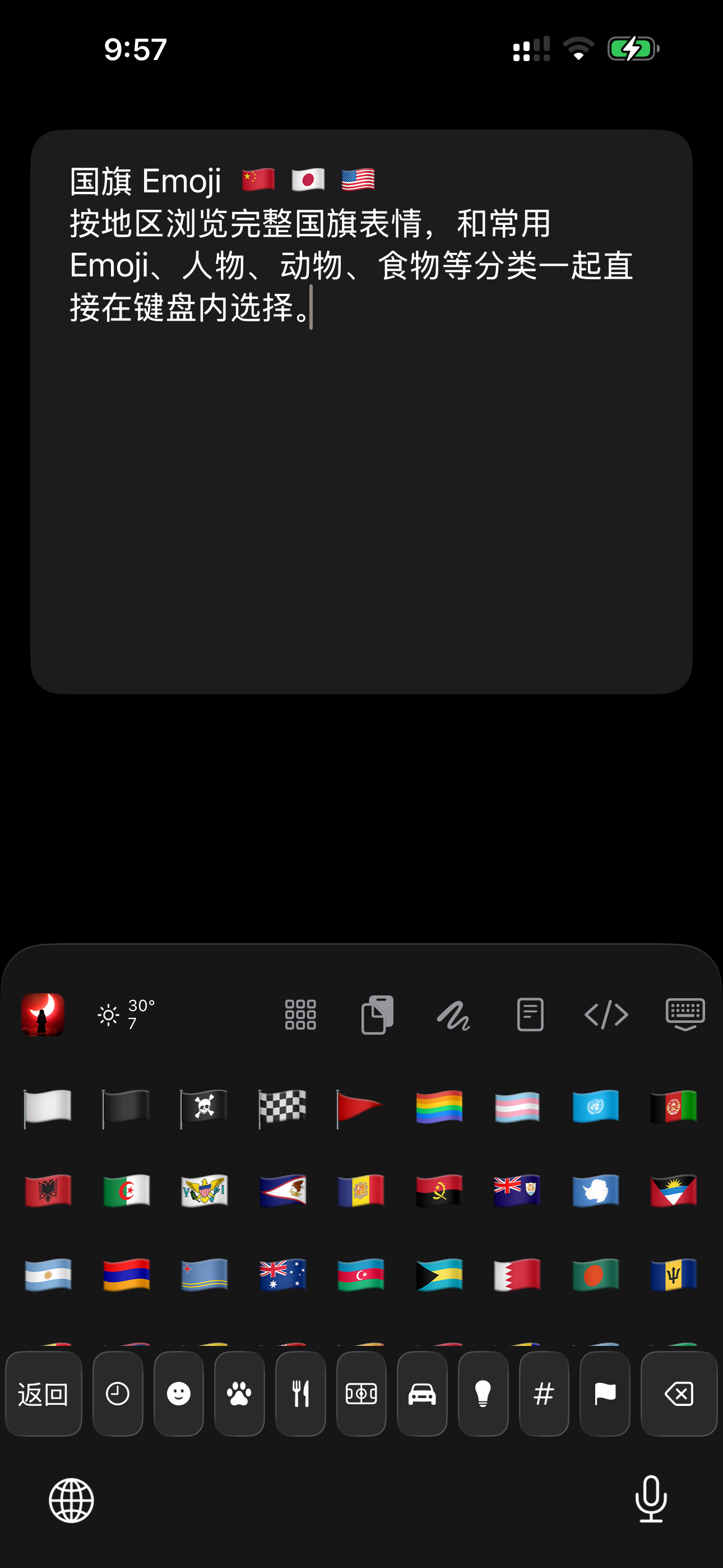
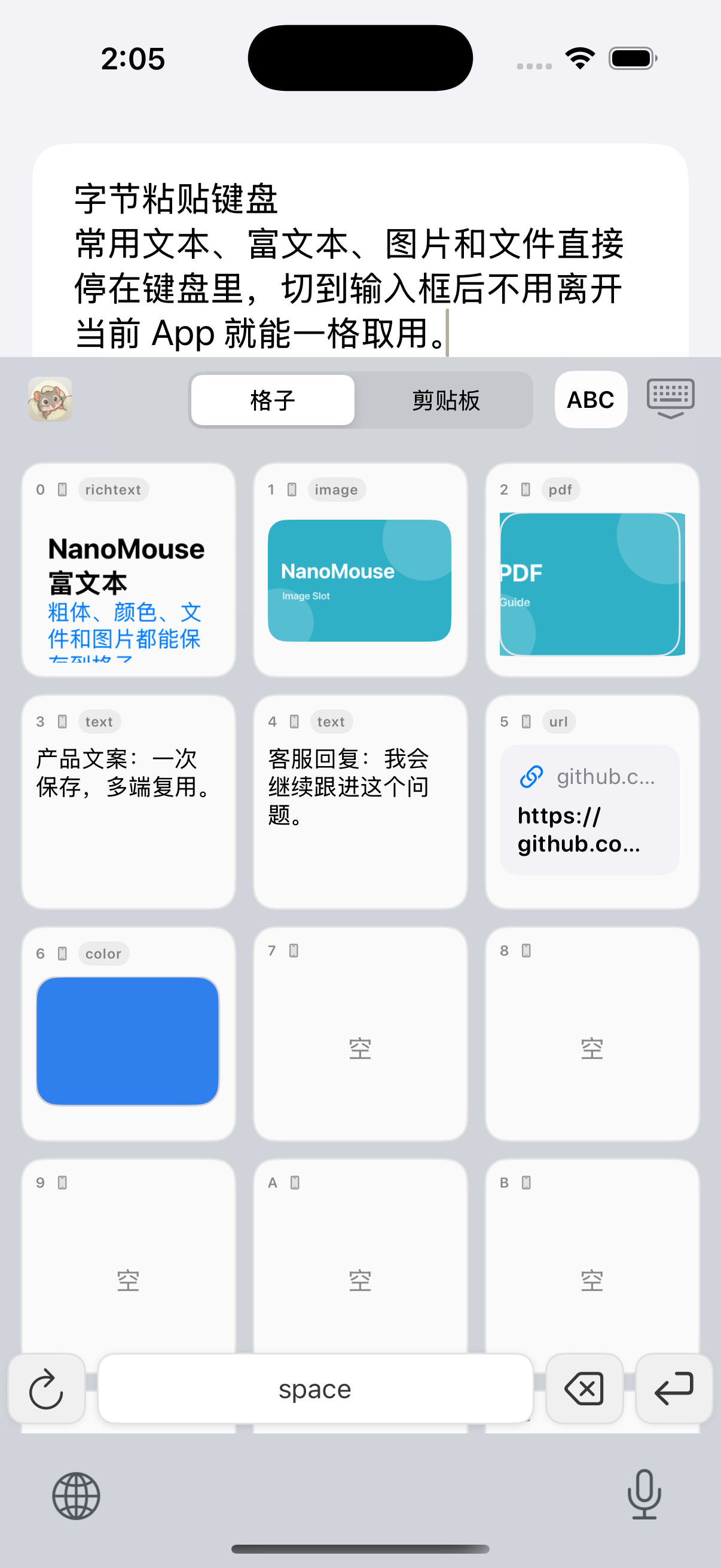
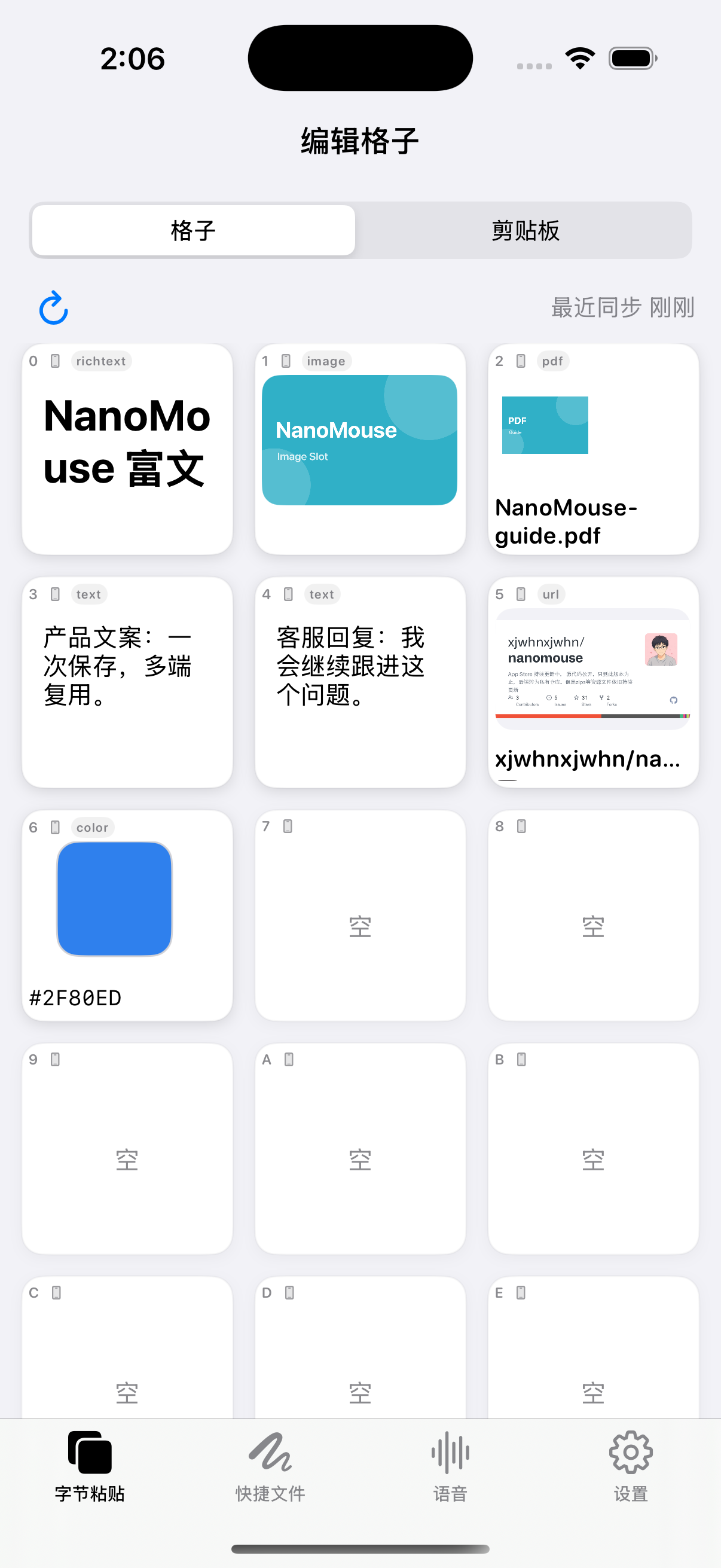
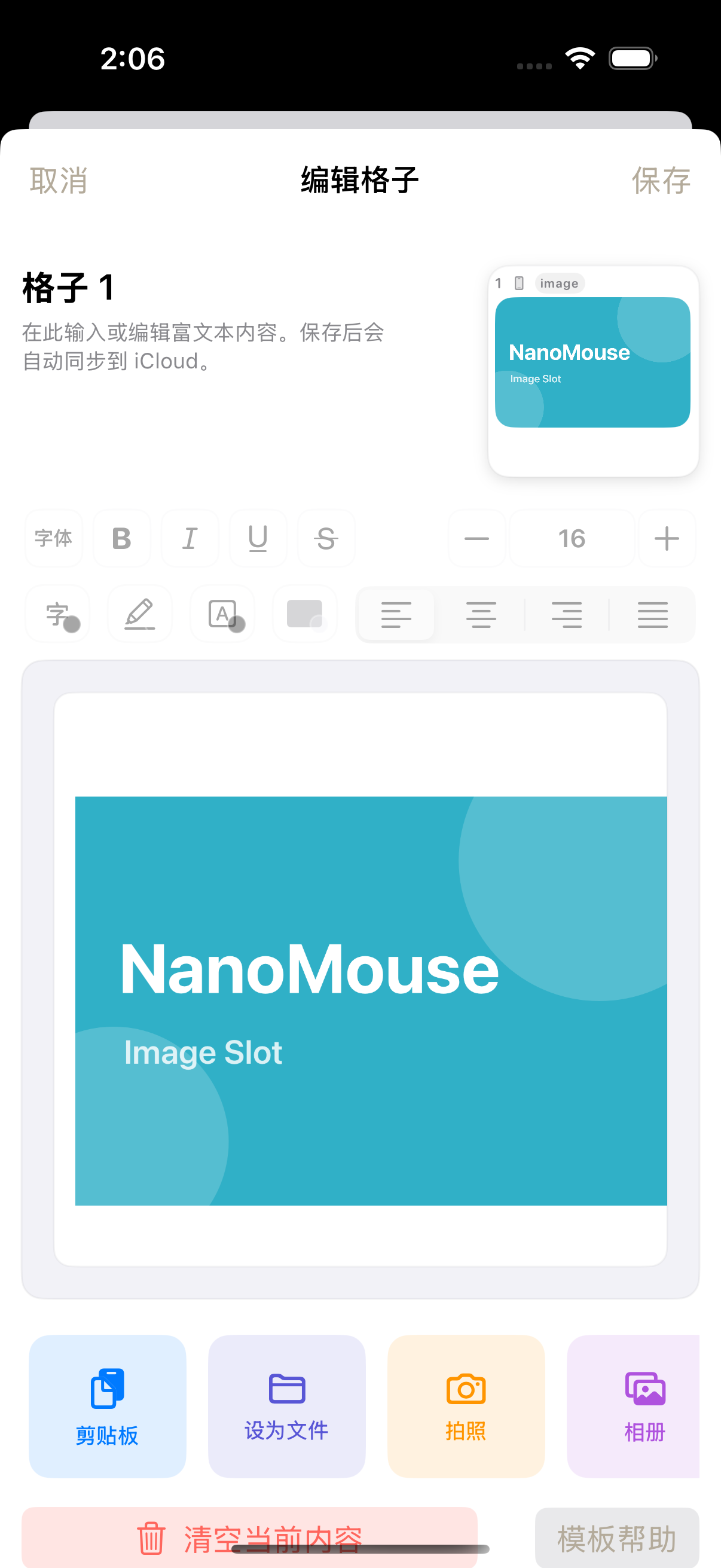
AI input
NanoMouse puts AI where writing happens. You invoke it, it works on the current text, and the result returns to the original input field only after you confirm it.
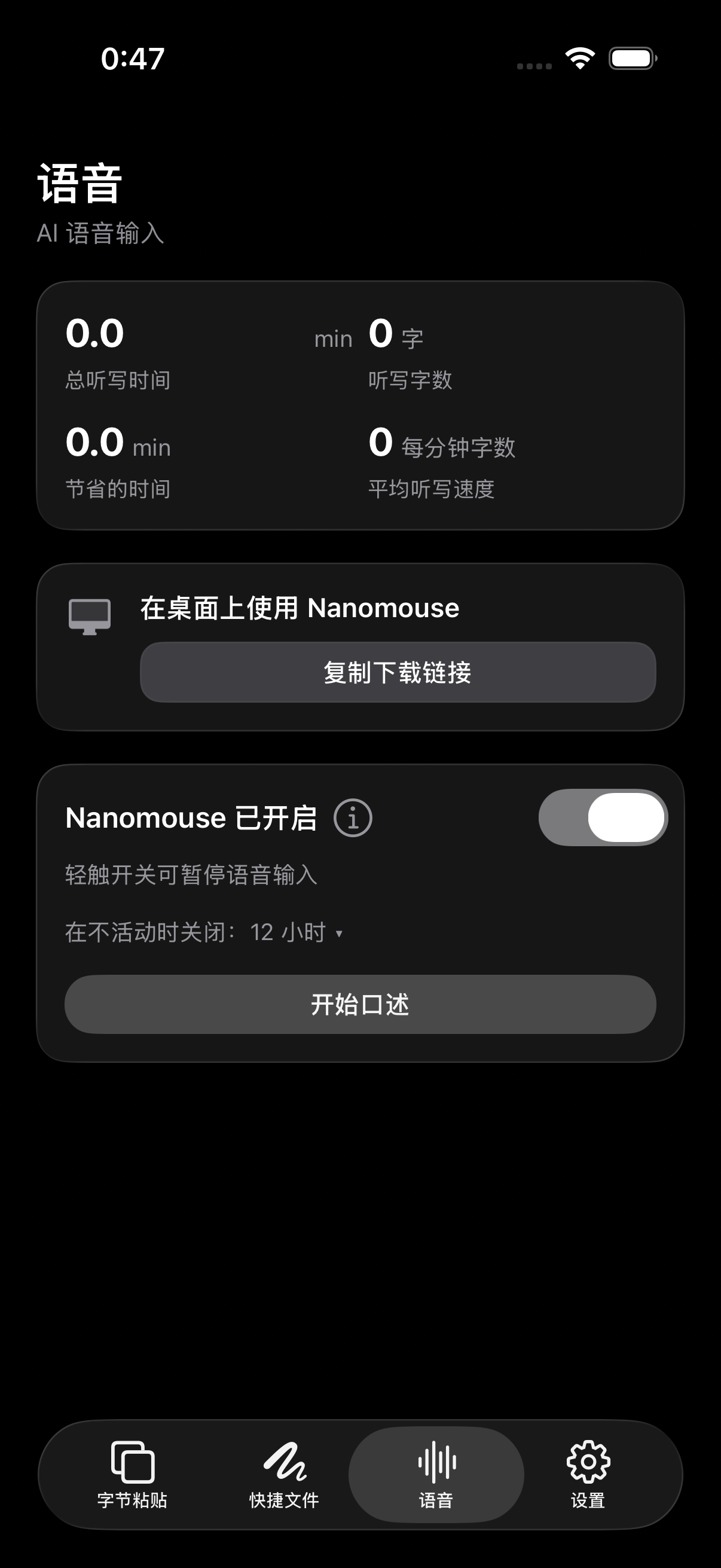
AI voice drafting
Capture speech with Apple Speech, offline Whisper, or online ASR, then clean up filler words, punctuation, and structure using the active preset.
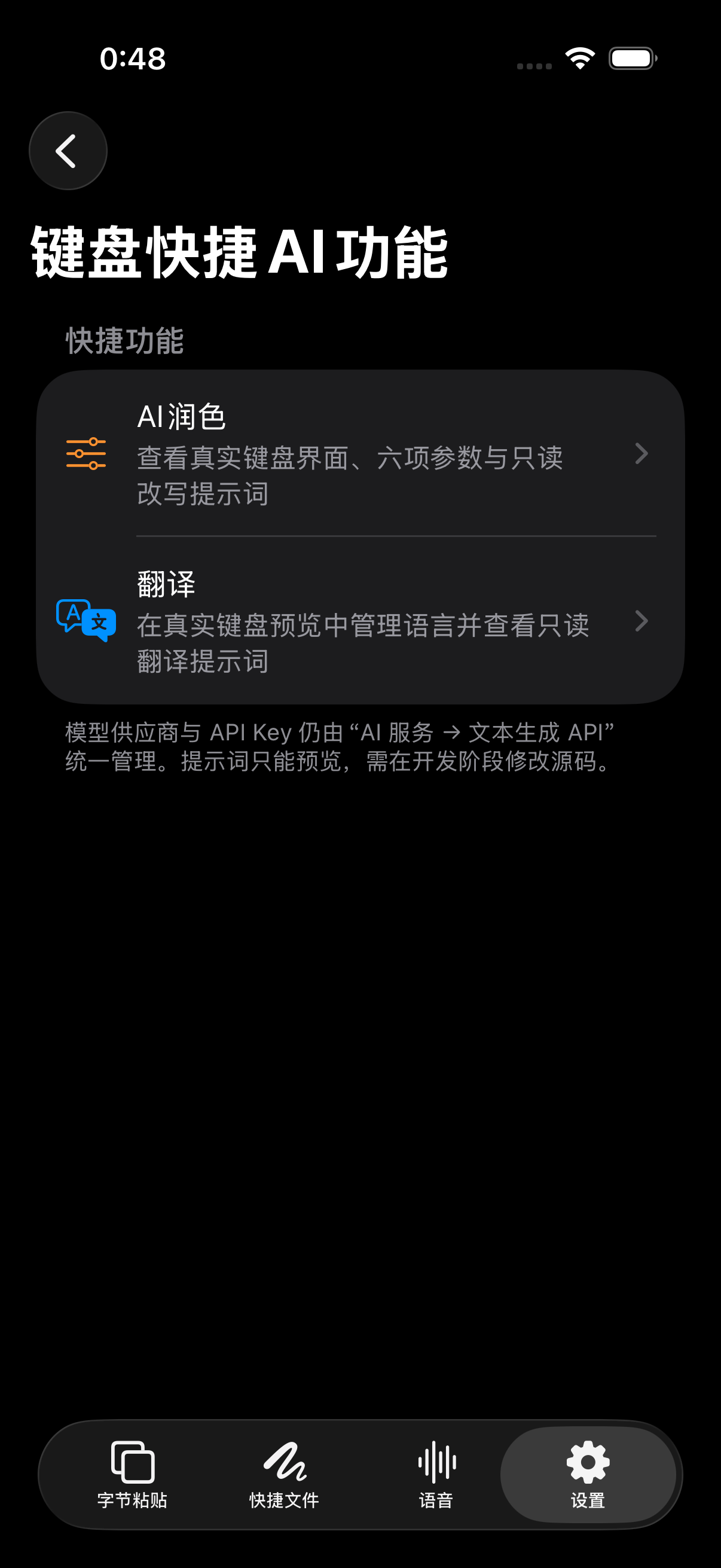
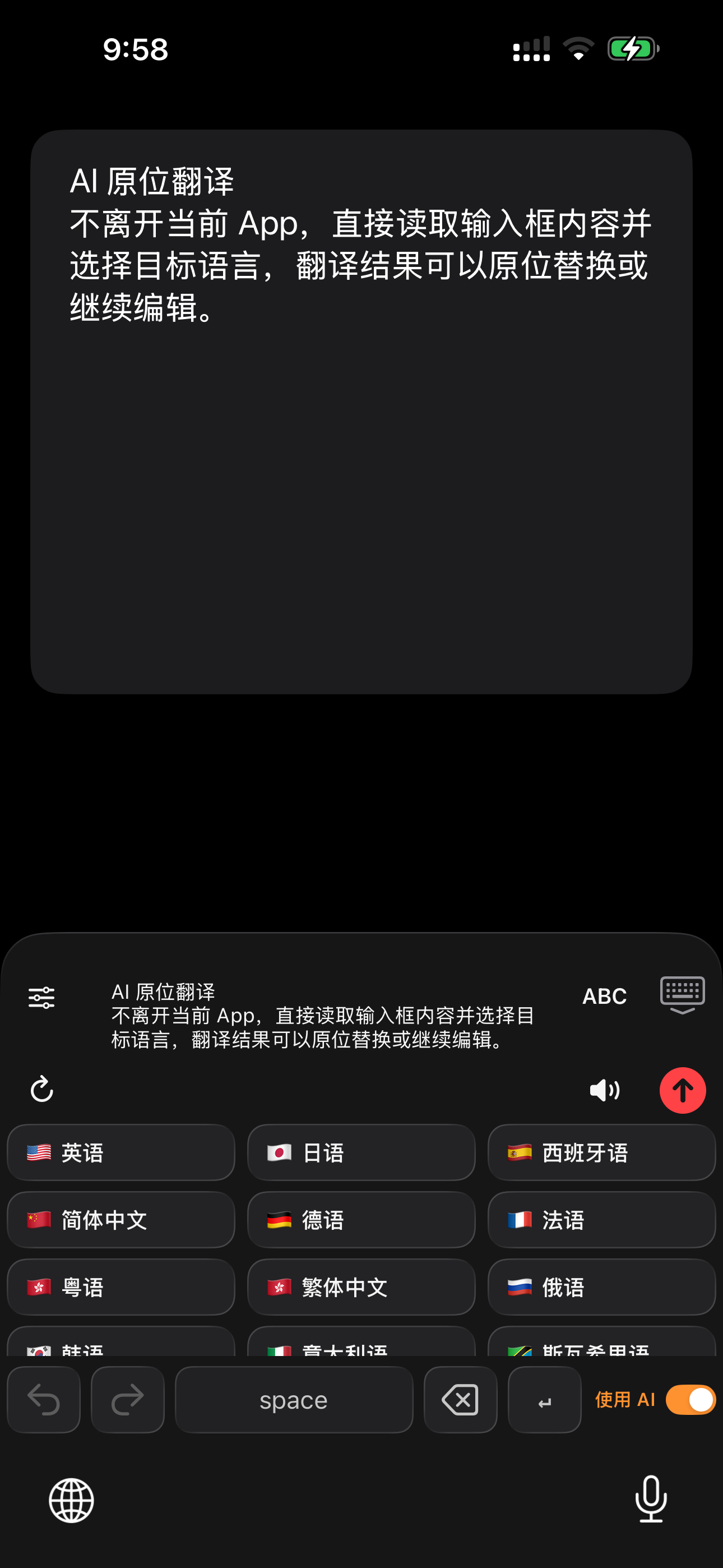
AI rewrite and translation
Read text you explicitly select or the current input field, rewrite or translate it in the keyboard, preview the result, and replace the original only after confirmation.
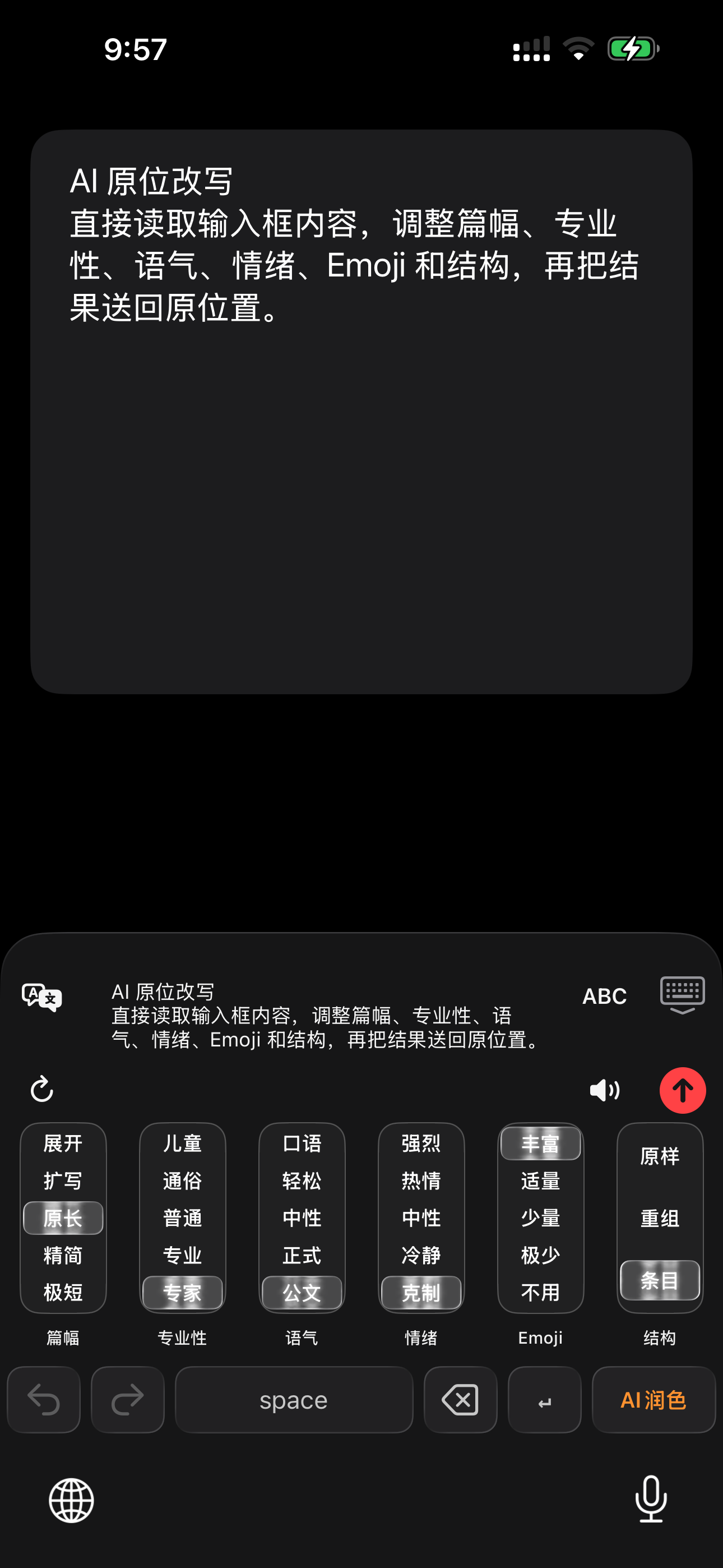
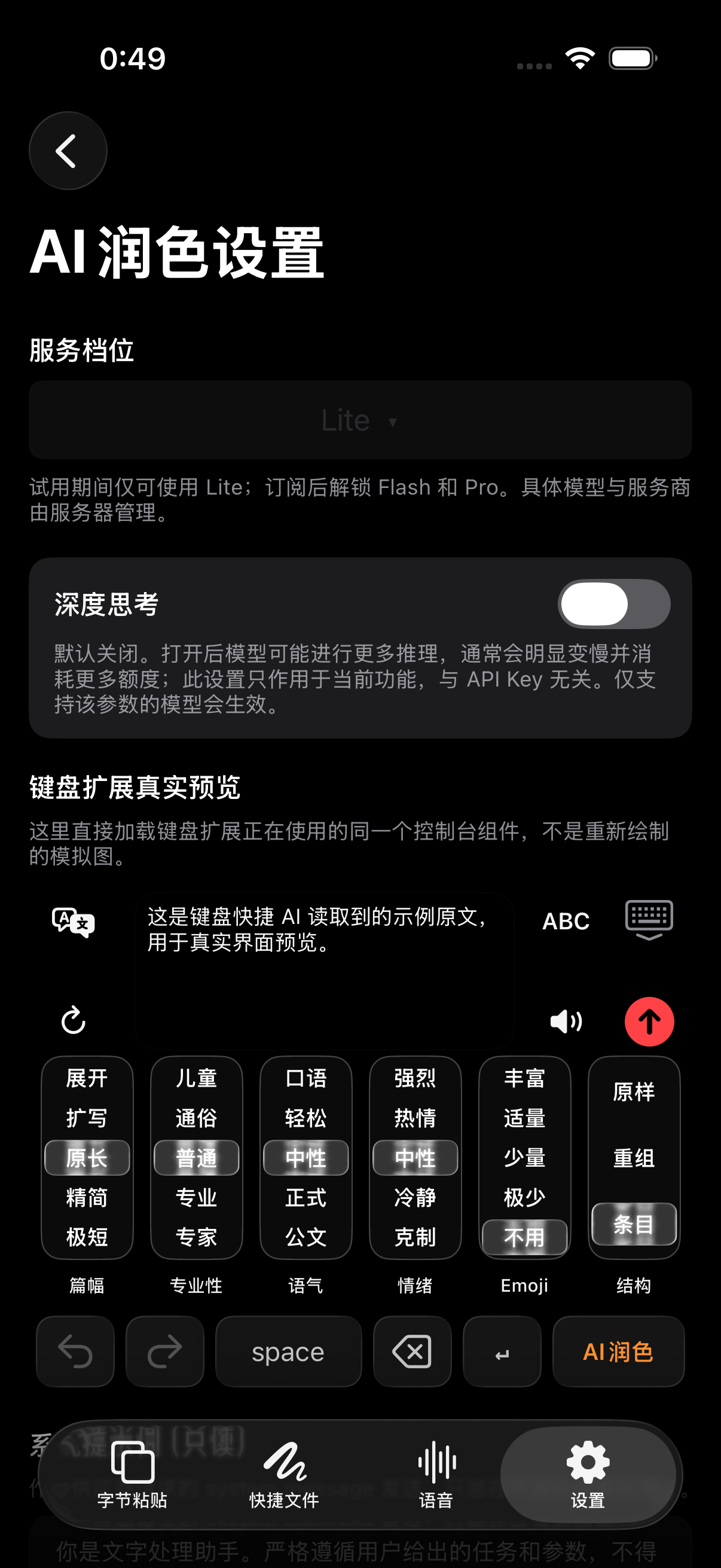
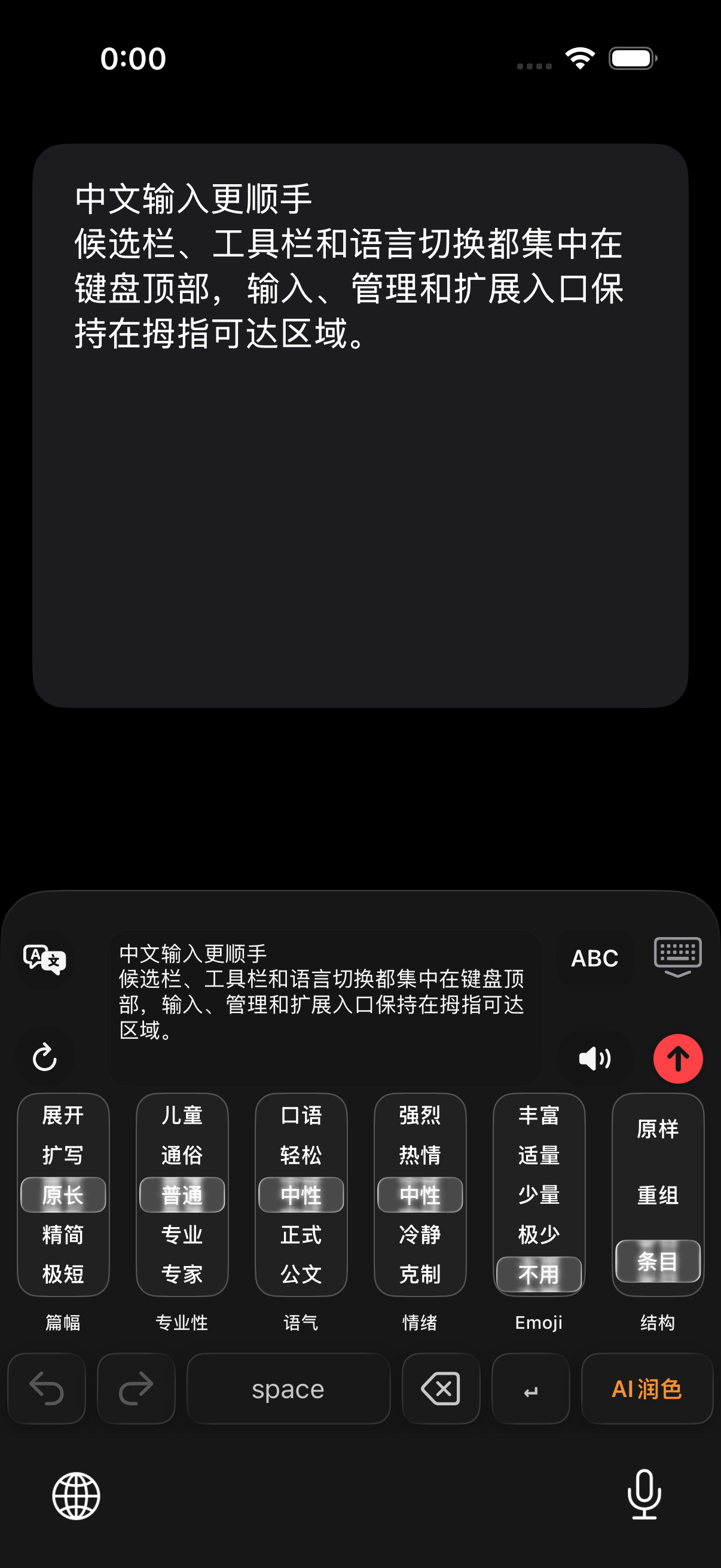
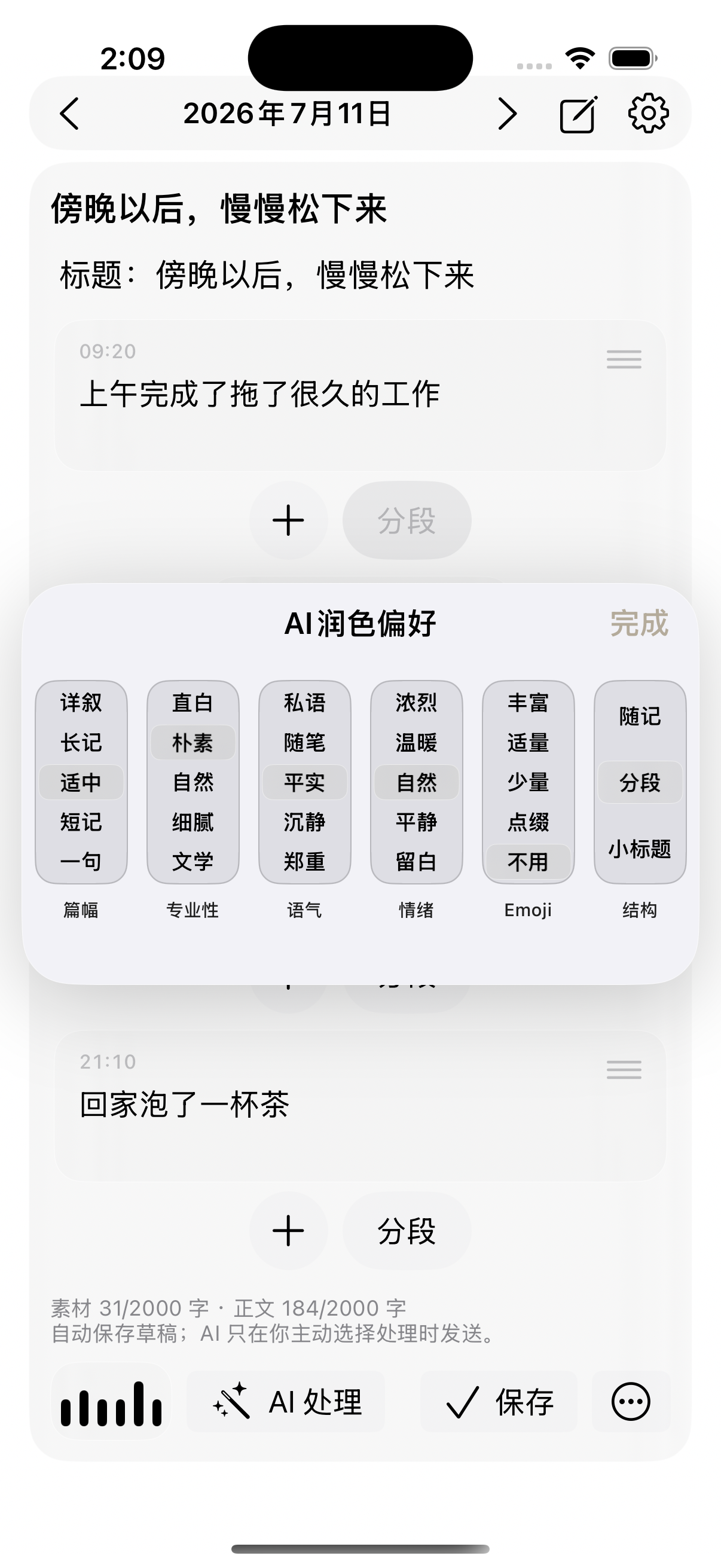
Six writing controls
Control length, professionalism, tone, emotion, Emoji, and structure independently for chat, email, long-form writing, and work communication.
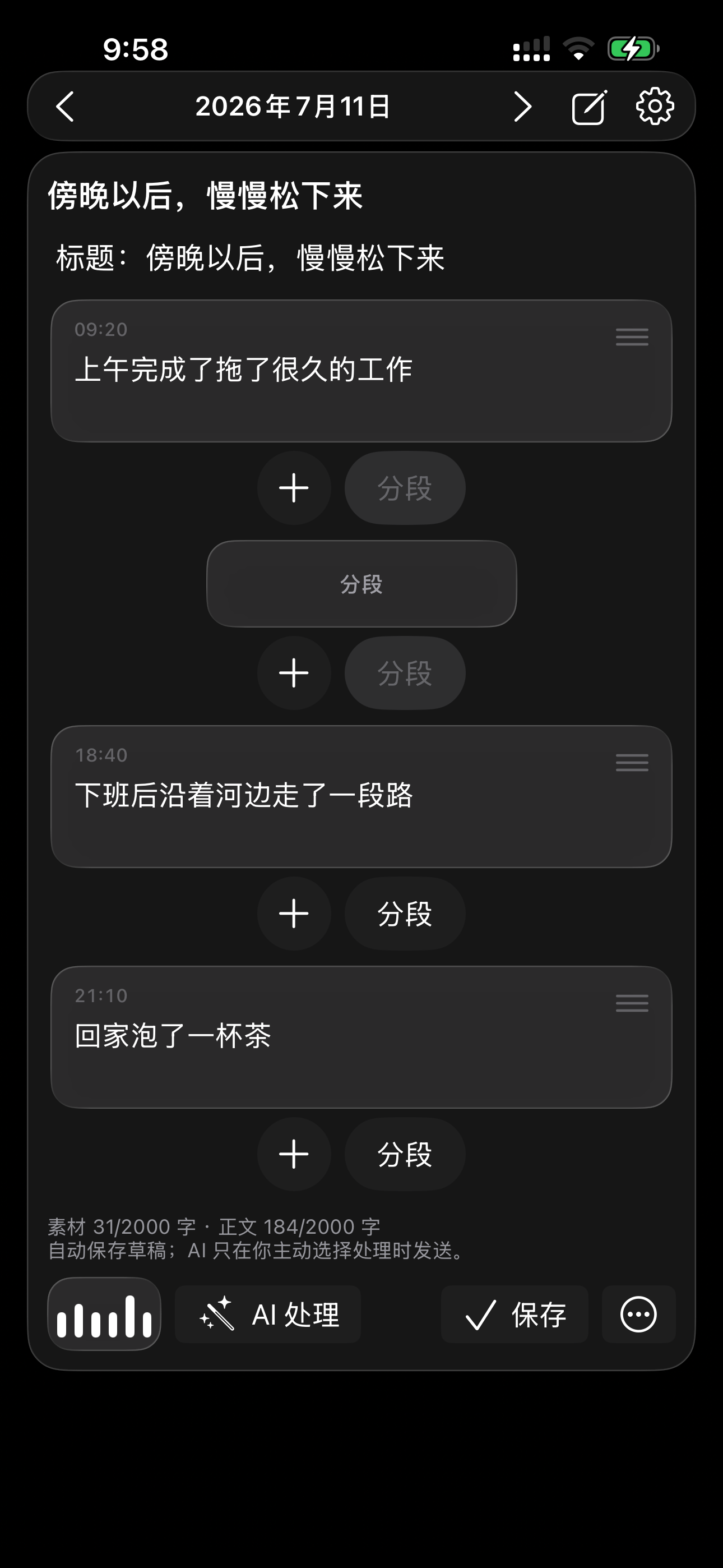
AI journal and material
Save fragments throughout the day, then organize them into a journal entry or editable draft using your chosen length, tone, and structure.
Input foundations and personal context
AI understands and organizes, Rime provides reliable input, and Byte Paste keeps the material you reuse. Together they form one continuous writing workflow.
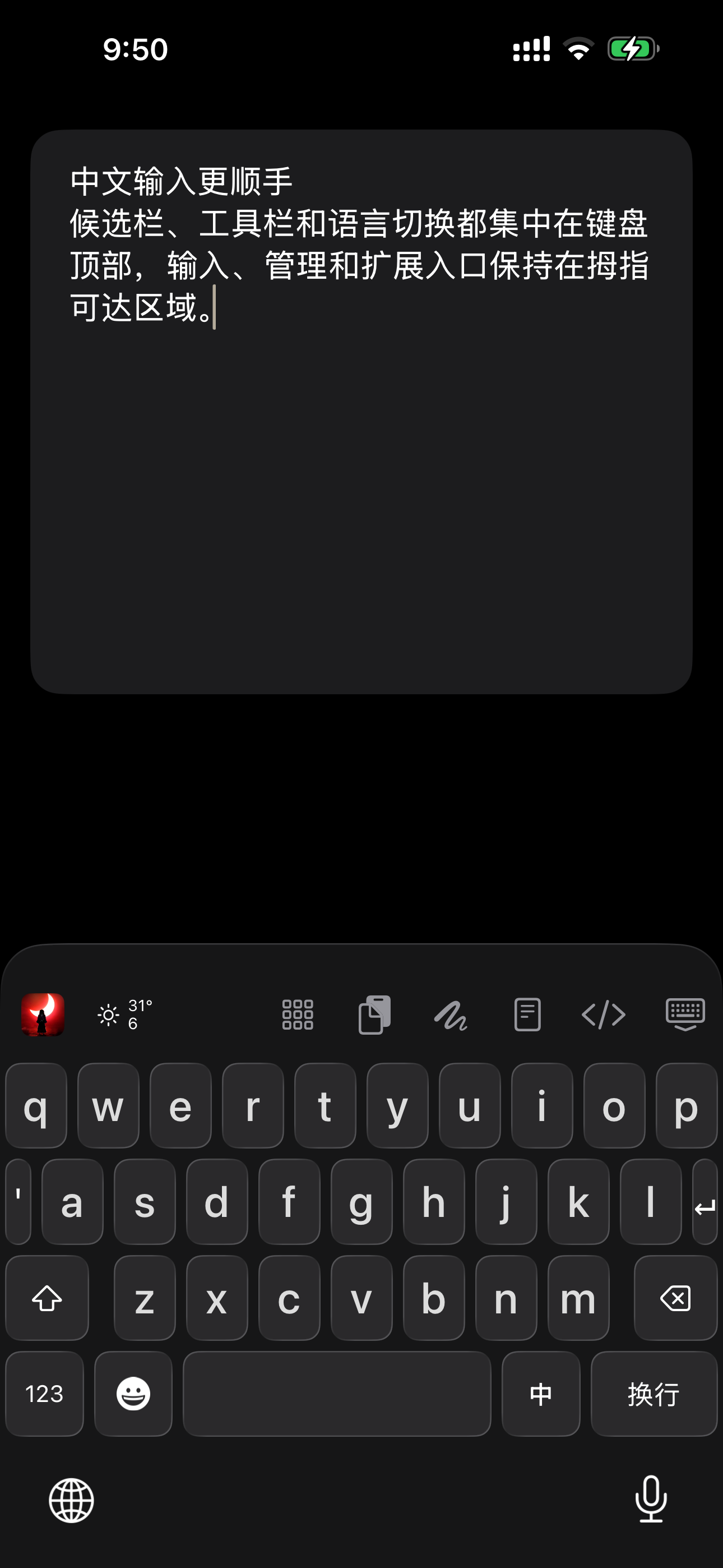
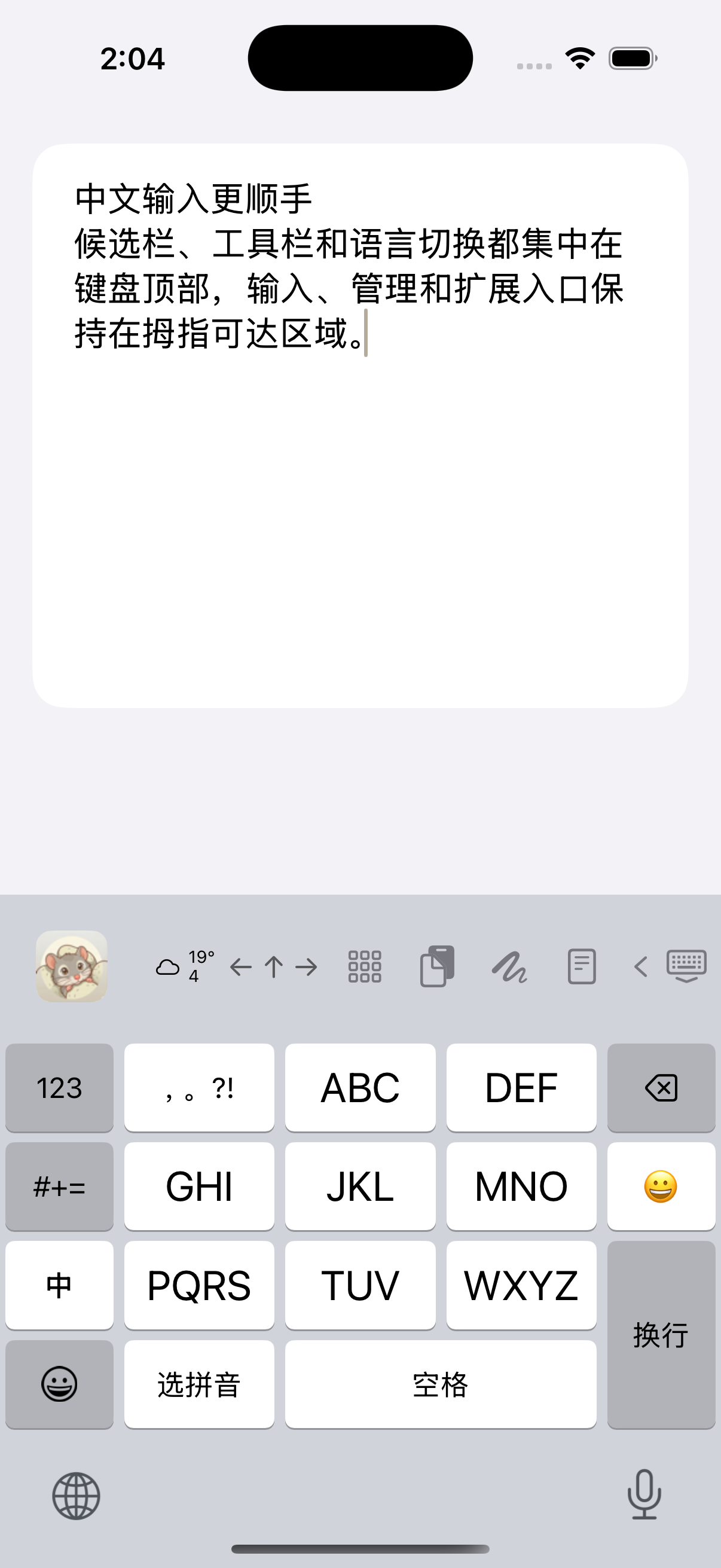
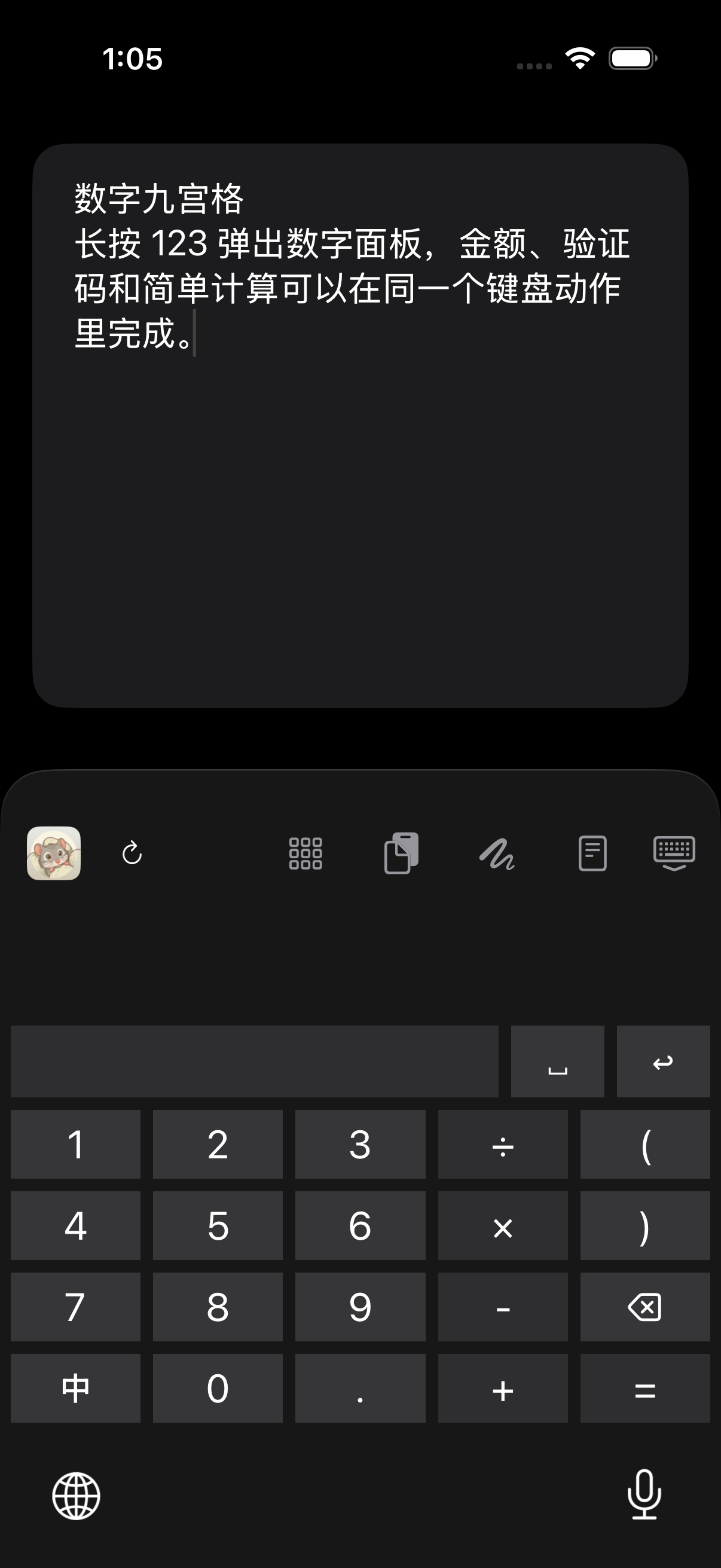
Supports Rime Ice Pinyin, full Pinyin, Double Pinyin, Chinese 26-key and 9-key, Simplified/Traditional conversion, and mixed Chinese, Japanese, and English input.
Use Byte Paste for reusable phrases, prompts, clipboard items, images, PDFs, Markdown, and files, then access them from the keyboard.
Synchronize Byte Paste content and creative files across iPhone, iPad, and Mac signed in to the same iCloud account.
Where NanoMouse is going
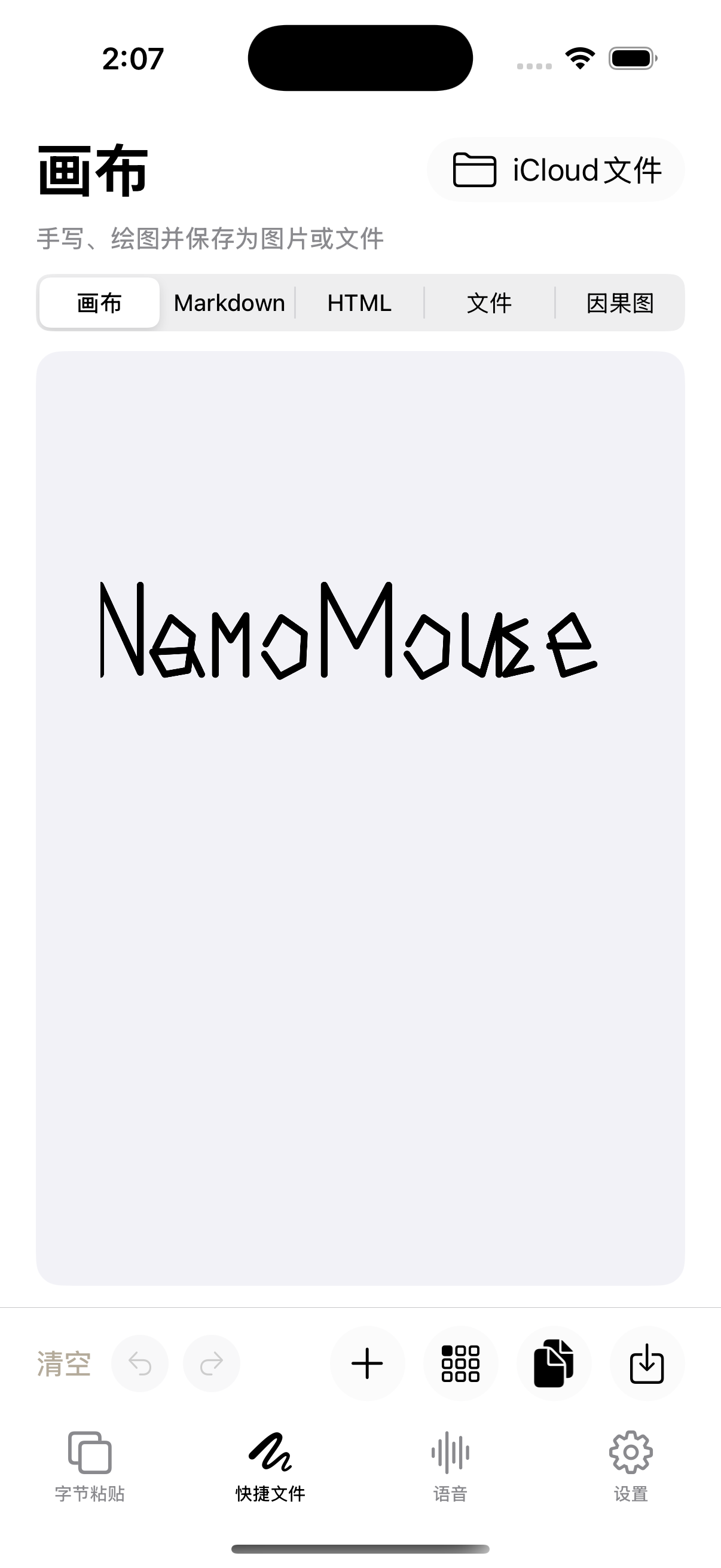
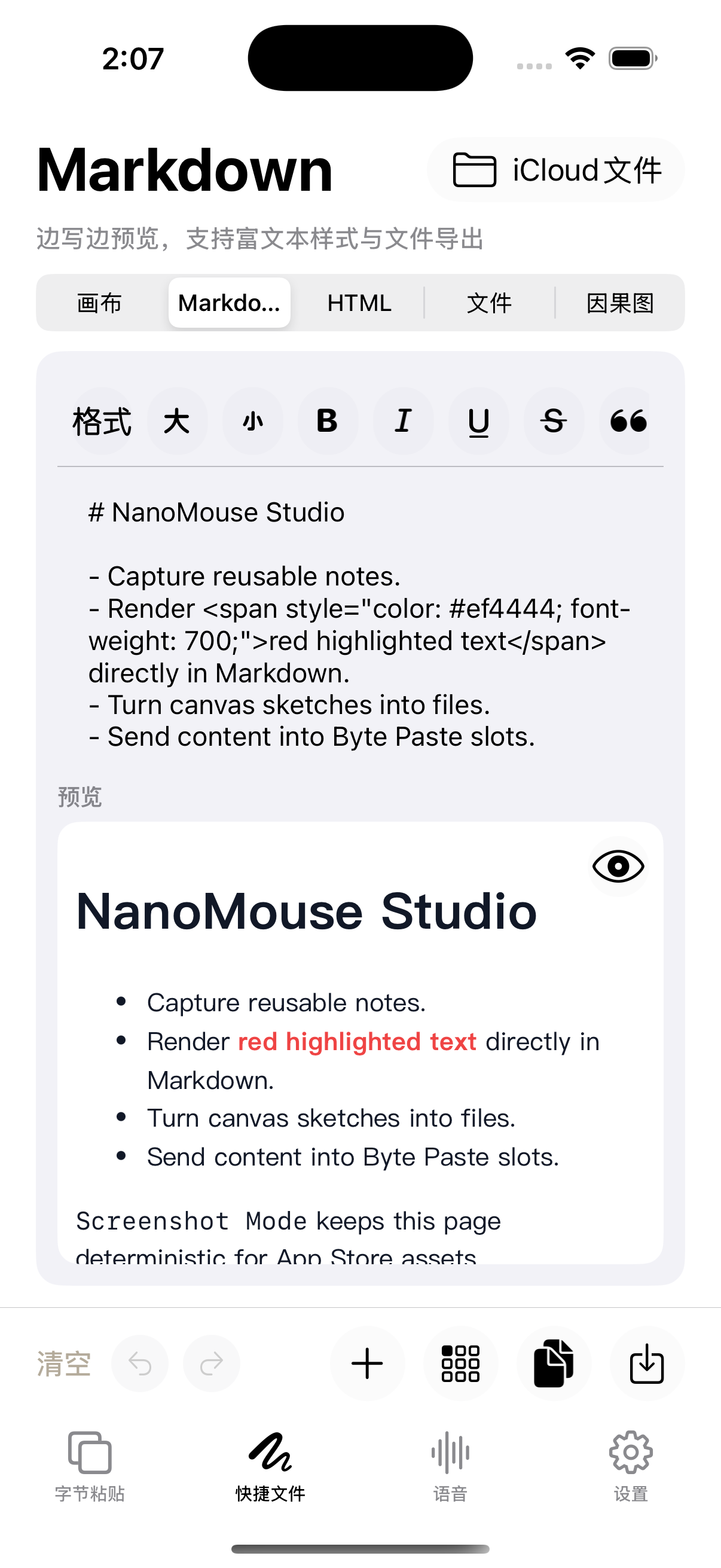
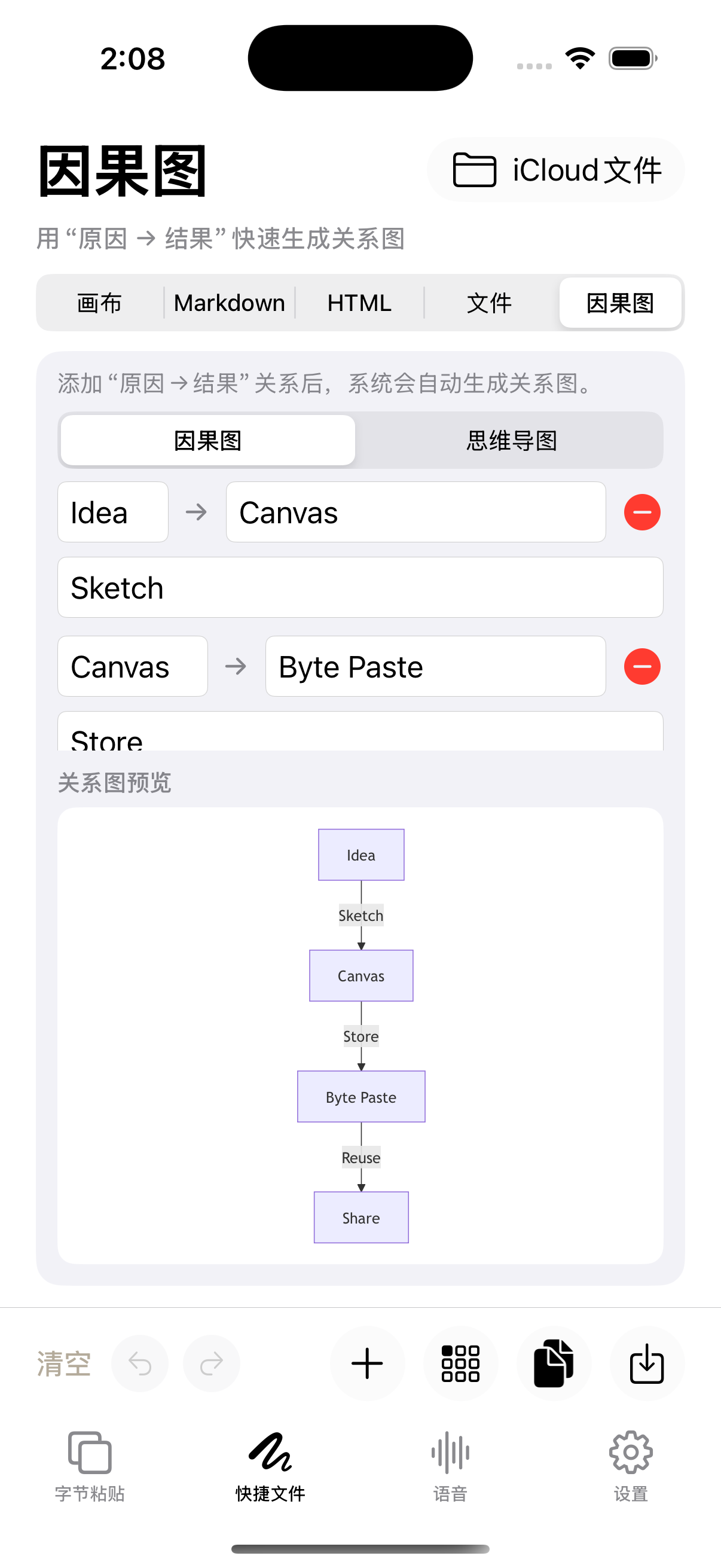
Byte Paste, clipboard history, journals, chat screenshot analysis, contact profiles, Markdown, and Canvas are not isolated features. They are personal input materials that can be saved, organized, and reused. NanoMouse will keep bringing them into AI-assisted writing with explicit permission and visible controls.
Frequently asked questions
NanoMouse is an AI keyboard for iPhone and iPad. It combines Rime Chinese input, AI voice drafting, rewriting, translation, and reusable personal material in one keyboard workflow.
After enabling the NanoMouse keyboard, you can use it in chat, mail, notes, office, and social apps that support third-party keyboards. Secure fields may switch back to the system keyboard under iOS rules.
Ordinary dictation mainly converts speech to text. NanoMouse can also remove filler words, add punctuation, and organize the expression with a preset so the result is closer to a ready-to-send draft.
No. Rime input runs locally, and some recognition or translation can use Apple or local capabilities. Whether online rewrite, translation, or ASR uses the network depends on the feature and service channel you explicitly enable.
NanoMouse supports Chinese 26-key, Chinese 9-key, full Pinyin, and Double Pinyin through Rime. On the Chinese 26-key layout, the syllable separator is left of A and Return is right of L for continuous composition.